
Exhibitions
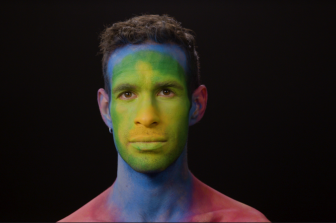
Space for Community Art: Or Peter: Persona, Between Screen and Mask
The exhibition presents some of the personas assumed by Peter. They are offered for viewers to choose, as masks that will either hide them or set them free. We do not have to choose one mask only. We may change masks and metamorphose whenever we want, whether through a physical or a virtual mask.
Wednesday, 18.10.23
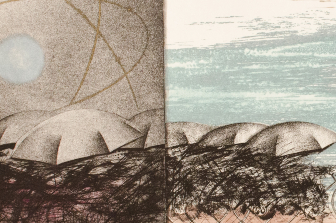
"New Acquisition V"
This is the fifth exhibition of its kind at the Tikotin Museum since re-opening to the public in 1995. Once again, we are proud to present a broad spectrum of artworks donated to or acquired by the Museum during the years that have elapsed since “New Acquisitions VI” in 2014. Traditional and modern prints, clothing accessories and other items are included in this exhibition.
The Museum’s collection has been augmented in various ways over the years. We acquire modern and traditional Japanese works of art, mainly in genres that enrich and sustain the collection, and artworks from new fields as well. Artists exhibiting either solo or in group exhibitions donate their own works to the Museum. Furthermore, some Japanese artists who have yet to be exhibited at the Museum also donate works. The collection has also grown thanks to collectors’ gifts and donations.
Saturday, 22.08.20
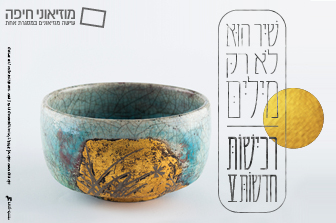
"Poems Are More than Words"
In early ink drawings it was customary to include gasen (writing). Gasen is original prose or verse, or a quotation from classical literature or poetry. In some instances, the text is added by a friend or admirer of the artist, and in others by the artist himself. Beneath the text the signature and seal of the poet are added. During the Edo era (1603-1868), the long tradition of poem-paintings
also began to appear as ukiyo-e (pictures from the floating world),
the woodblock print genre. Although ukiyo-e is considered a
popular art form, it is still closely linked to the classical Japanese
culture. This is evident in the integration of classic tanka poems
in the paintings or prints. An innovation of the Edo period was
illustrating poetry anthologies. The best known of these is "One
Hundred Poems of One Hundred Poets" (Hyakunin isshu).
Saturday, 22.08.20
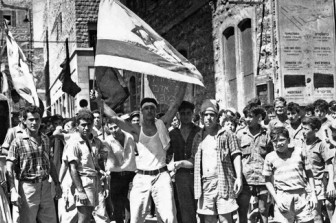
Oskar Tauber: photo-journalist
From "A Black Flag in a Red City"
In the 1950s, a number of professional photographers were active in Haifa. Some worked for local institutions and government bodies. Amiram Erev (the “Solel Boneh Photography Studio”) and Moshe Gross (the “Keren Or” studio), for example, documented the period’s bustling industries and massive surge of construction. Alongside Arav and Gross, photographers passing through the city — such as Boris Carmi and Zoltan Kruger — commemorated its unique views.
Saturday, 02.05.20
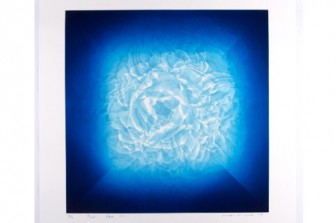
60 Contemporary Japanese Prints
The exhibition "60 Contemporary Japanese Prints", celebrating the sixtieth anniversary of the Tikotin Museum of Japanese Art, is the outcome of a joint initiative between the Yoseido Gallery, Tokyo, and the Tikotin Museum. On this festive occasion we are delighted to exhibit works by sixty of the finest contemporary Japanese print artists. Fifty-seven artists decided to donate their works to the Museum collection at the close of the exhibition and the Yoseido Gallery donated the remaining three works to the Museum.
Tuesday, 28.09.21
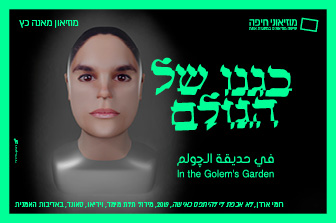
In the Golem's Garden
The story of the Golem – a staple of Jewish folklore – describes a being made of clay and brought to life using secret incantations. This act straddles the boundary between the godlike and the sinful, between wisdom and witchcraft. The legend about the man-made creature expresses a desire for power, control, and convenience. These desires continue to animate the heart of man to this day.
Sunday, 14.06.20
Curators: Michal BenJakob and Dafna Falk
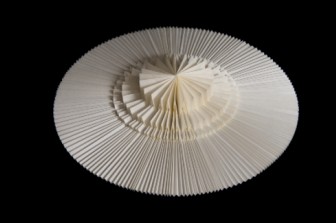
Origami Installation
Tomoko Fuse
What is origami? Most people would describe it as is an activity in which squares of colored paper are folded to create representations of animals, objects or geometric forms. However, this would not describe the folded paper installations of Tomoko Fuse (b. 1951). Her work asks us to consider the relationships between tradition and innovation. Is her work origami, or is it sculpture made from folded paper?
Saturday, 18.04.20
Curator: Paul Jackson
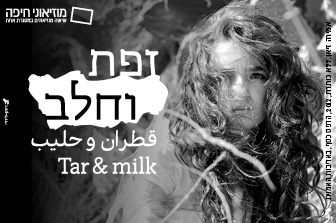
Tar and Milk
Local art, whether Israeli or Palestinian, has over the generations sharpened its gaze upon the homeland's scenery – a gaze traditionally burdened by concern and distress, on both the personal-existential and the historical-geopolitical level. However, the local artistic discourse surrounding this issue has scarcely considered its gender-oriented aspects. Neither the Israeli nor the Palestinian artistic discourse distinguishes between the masculine and the feminine gaze with regard to this charged subject. The present exhibition cluster seeks to address this complex and mostly neglected issue.
Friday, 24.01.20
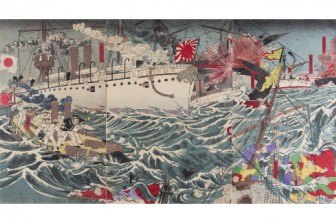
Winds of War Japanese Propaganda Prints of the First Sino-Japanese War and the Russo-Japanese War
In the mid-19th century, following a period of two hundred and fifty years of seclusion, Japan opened its gates to the West and trade relations with various countries were established. In addition, Japan formed a large army in order to protect its strategic interests in neighboring countries, as did many other world powers of the time.
At the end of the 19th century, Japan's territorial disputes with China on Korean soil increased and it sent troops to the region. In the early 20th century, Japan did so once again, in a similar conflict with Russia. During the Sino-Japanese War (1894-1895) and the Russo-Japanese War (1904-1905), the Japanese army fought on various fronts in Korea and in Manchuria, China.
Saturday, 04.01.20
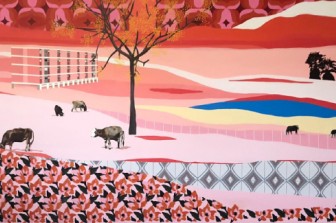
"Demolition Party: From Public Housing to Residential Tower"
The term "public housing" elicits a clear image: uniform buildings three or four stories high, arranged in a row, dating from the 1950s and 1960s. In Israeli films from the 1980s, public housing serves as the backdrop of the remote, neglected places known as "the other Israel." These disregarded towns, situated far from the country's center, are populated mostly by Mizrahi Jews and feature a monotonous urban landscape.
Saturday, 08.02.20
Please contact us and we will contact you as soon as possible